All Categories
Featured

Modern Home Decor Trends for 2026
Table of Contents
Decluttering will make more space for what serves you now. Keep daily products front and.
Keep off-season clothes in identified bins or a secondary closet to avoid daily visual mess. Little, constant habits are what keep your closet from becoming crowded once again.
Having a "contribution station" right where you keep your clothing makes it easy to declutter in the minute. Develop a couple of clothing formulas you like to reduce decision fatigue and make getting dressed much easier. Each of us has a small closet of clothing we really wear and love. Off-season pieces live elsewhere, so our daily closet area remains uncluttered.
Shelves, drawers, and low-hanging area get rid of the need for large cabinets. In early spring and fall, I swap out our spring/summer and fall/winter wardrobes and declutter anything we have not worn as part of the process.
Streamlining your bedroom assists create an area that really feels relaxing and is simple to keep. It likewise gives you a quick win to build momentum and more area to work.
Trending Home Decor Trends in 2026
Eliminate stacks of books, water glasses, and random items that gather on nightstands or cabinets. If you have extra chairs, cabinets, or tables you don't utilize, think about letting them go for more breathing space. Keep just the art, pictures, fabrics, and decoration that you really like and make the area feel peaceful.
A lamp, book, and maybe a small plant or candleless visual noise implies a more calming area. Utilize a small tray or basket for products like battery chargers, lotion, lip balm, and your existing book. Put unclean clothes straight into the obstruct, and designate a hook or drawer for those not-quite-dirty items you'll wear once again.
Utilize under-bed or secondary closet area for off-season bed linen or hardly ever utilized items. Take 2 minutes each morning to make the bed and clear surface areas.
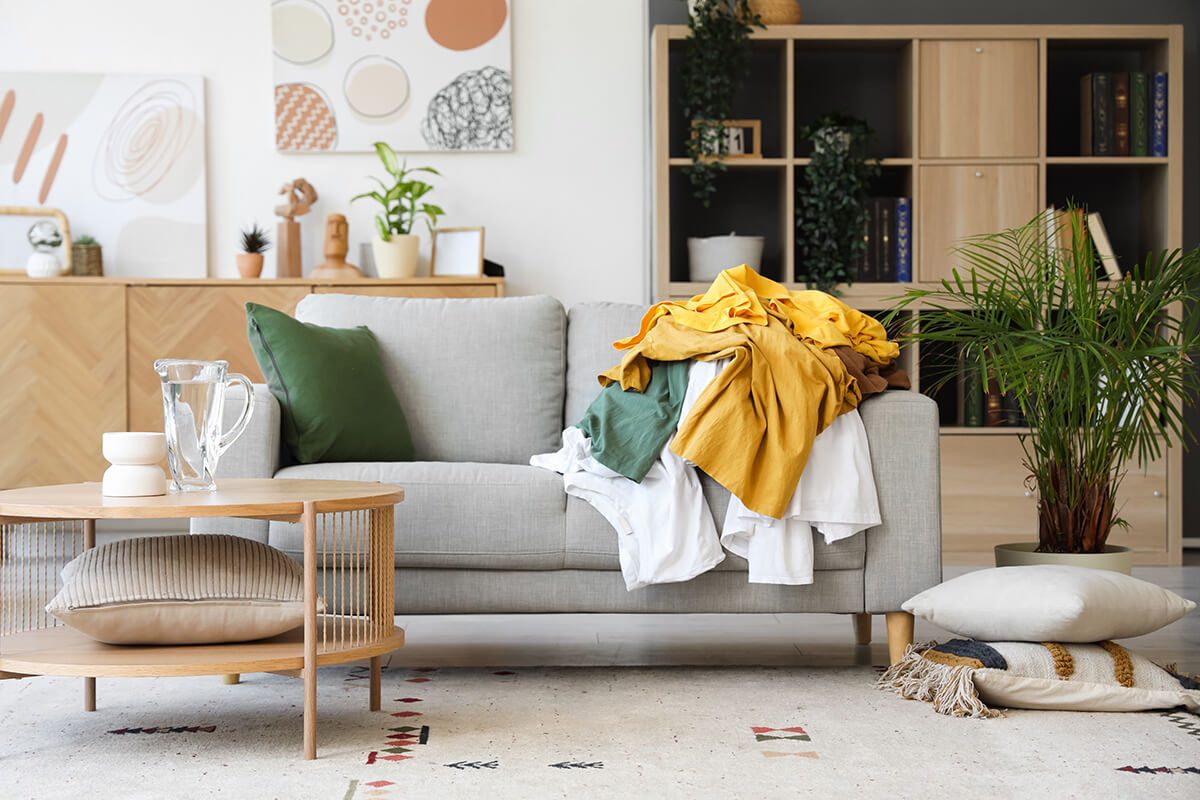
I chose nightstands with a built-in rack and drawer so there's space to tuck things away rather of leaving them on top. Filthy clothing go straight to the laundry room that night or first thing the next morning. Designated hooks or drawer space include clothes that can be used again before cleaning, so they're not left on furniture or the flooring.
How to Declutter the Home Before Moving
A few little tweaks can turn these locations into practical spaces that make daily life easier. Declutter one location or shelf at a time so it feels workable.
5 Ways to Decrease the Carbon Footprint of Your Business MoveKeep counters and the tops of your washer and clothes dryer clutter-free for much easier folding and spot-cleaning. Use up the products you have before purchasing more.
Usage baskets or bins to keep laundry products and cleansing tools together. Shop sheets and pillowcases from each set inside one pillowcase for simple access. One or two additional sets of sheets and towels per bed or individual is usually plenty. Fold towels and sheets nicely, saving by size or set.
A couple of little systems will keep laundry and linens from accumulating again. Find a regimen that works for your familyone load per day, one day a week for all laundry, or designated days by individual or classification (towels one day, bedding another). Put fresh laundry away before the end of the day to avoid stacks from forming.
Why Expert Moving Logistics Matter for 2026
When a basket is nearly full, that's my hint to run a load. We keep two sheet sets per bed and two towel sets per individual. Our backups function as visitor towels when we have visitors. On the unusual event we have a very complete house, we can borrow from good friends or neighbors.
5 Ways to Decrease the Carbon Footprint of Your Business MoveI do my best to keep the laundry room counters and the sink clear so they're constantly ready for folding or spot-treating. Otherwise, those little jobs get put off and produce more work for future me.
A cluttered office doesn't just make work feel harder; it drains your focus, energy, and productivity. Simplifying your documents and workplace will make you more efficient, and your work will feel lighter and easier to handle. Start where you can see progress quicklythe top of your desk, your command center, or the paper piles that drive you most crazy.
Keep just a handful of pens or pencils and one or two of your go-to office fundamentals convenient. Shop the additionals somewhere else so they do not clutter your desk or drawers. Develop basic classifications: to file, to do, follow-up, to shred. Toss things that can be recycled, like old invoices, brochures, user's manual, and previous costs.
As soon as you have actually pared back, style simple, intuitive systems you'll actually preserve. Designate one spot for incoming mail or school papers to avoid piles from spreading. Use a little tray or vertical file for current jobs or costs due soon. A few broad categories (Home, Work, Kids, Health, Financing) are simpler to preserve than detailed subfolders.
Steps to Create the Perfect Interior in 2026
Usage drawer organizers to consist of the office supplies you frequently utilize and save bonus elsewhere. Paper will constantly be a prospective source of mess, but a couple of simple systems and practices can keep it from taking control of once again. Spend 1015 minutes sorting mail, submitting what's needed, and recycling the rest.
A "follow-up" folder can also be helpful for items you're waiting on after you've taken initial action. When a file, drawer, or bin is nearly full, you probably do not require more paper storage, just an excellent declutter.

Latest Posts

Getting Your Home Ready for Sale for 2026

Mastering Efficient Relocation Strategies During 2026
Streamlining Your Moving Logistics in 2026